You walked away from the crash, and right now that feels like enough. But walking away does not always mean you are in the clear.
Some of the most serious injuries from auto accidents do not show up right away. A sore neck might be whiplash. A headache might signal a concussion. Pain that feels manageable in the moment can be a sign of something that needs attention fast. That is why getting checked out after a car accident is not overreacting. It is the right call.
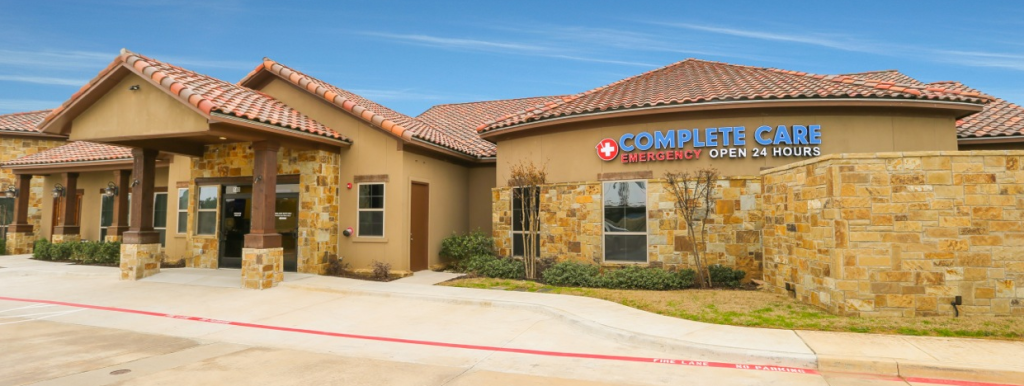
At Complete Care, we provide emergency auto accident injury treatment for patients across Texas and Colorado Springs. Our freestanding ERs are equipped to diagnose and treat the full range of injuries that can follow a collision, from soft tissue damage and fractures to head injuries and internal trauma.
You get the same level of care as a hospital emergency room, without the long wait times or the overwhelming crowds. Our emergency-trained physicians are ready to do imaging, run labs, and put together a treatment plan on the spot, so you know exactly what you are dealing with and what comes next.
If you were recently in an accident and something does not feel right, do not wait to see if it gets better on its own. Visit one of our ER locations in Texas or Colorado Springs and let our team take a look. Getting checked out early can make a real difference in how you heal.
For life-threatening situations, please call 911.
Table of Contents
- What to do after a serious car accident?
- What are the most common car accident injuries?
- Can you have delayed injuries after a car accident?
- How are car accident injuries treated?
- Why choose Complete Care
- FAQs
What to do after a serious car accident?
After a serious car accident, the most important thing you can do is get medical attention right away, even if you feel okay. Many serious car accident injuries do not show symptoms immediately, which means waiting to see a doctor can allow hidden damage to get worse. If your injuries are life-threatening, call 911. For everything else, getting to an emergency room as quickly as possible is the right move.
Here is what to do in the moments after a crash:
- Check yourself and others for injuries. Before anything else, take a moment to assess how you and anyone else in the vehicle are feeling. If anyone has life-threatening injuries, call 911 immediately and do not attempt to move them.
- Move to a safe location if you can. If the vehicle is drivable and it is safe to do so, move it out of traffic. Turn on your hazard lights and stay nearby until help arrives.
- Call the police. Even for minor collisions, a police report creates an official record of the accident. This matters for both insurance purposes and any future medical or legal claims.
- Document the scene. Take photos of the vehicles, any visible damage, the surrounding area, and your injuries if visible. Collect the other driver’s name, insurance information, and contact details.
- Get to an emergency room. This step cannot wait. Even if you feel fine, get evaluated by a physician as soon as possible. The medical records from your visit create an official, timestamped record that connects your injuries to the accident, which can be critical when dealing with insurance adjusters or any legal claims down the road.
Continue reading: Should I go to the ER after a car accident?
What are the most common car accident injuries?
The most common car accident injuries include whiplash, concussions, broken bones, soft tissue damage, and internal injuries. These can range from painful but manageable to serious and life-threatening, which is why a full evaluation after any significant collision is always worth it. Even a low-speed crash can cause real damage that is not obvious at first glance.
Here is a closer look at what we treat most often:
Whiplash and neck injuries
When your head snaps forward and back during impact, it strains the muscles and ligaments in your neck. Whiplash is one of the most underestimated car accident injuries because it often feels mild at first and gets significantly worse over the following days.
Head injuries
Concussions, skull fractures, and traumatic brain injuries can all result from hitting your head on the steering wheel, window, or headrest during a crash. Head injuries require prompt evaluation because symptoms like confusion, headaches, and memory issues can point to something serious happening inside the skull.
Broken bones
Impact and bracing for a crash can both cause fractures. Broken bones in the arms, wrists, ribs, legs, and collarbone are common, and some fractures are small enough that you might not realize you have one without imaging.
Soft tissue injuries
Sprains, strains, and tears to muscles, tendons, and ligaments are extremely common after a collision. They do not show up on X-rays, but they can cause significant pain and limit your movement for weeks.
Internal injuries and abdominal pain
Blunt force from a seatbelt or the steering wheel can damage internal organs without leaving a visible mark on the outside. Left side abdominal pain after an accident is something we take seriously, as it can indicate injury to the spleen, stomach, or other organs that require immediate attention.
Burns
In accidents involving fire, airbag deployment, or chemical exposure, burn care is a critical part of emergency treatment. Burns need to be properly cleaned and dressed right away to prevent infection and limit long-term damage.
Back and spinal injuries
The force of a collision can herniate discs, compress nerves, or damage the spinal cord itself. Back pain that radiates into your legs, numbness, or tingling are all signs that something more than a muscle strain may be going on.
Can you have delayed injuries after a car accident?
Yes, delayed injuries after a car accident are very common. In the moments after a crash, your body releases adrenaline and other stress hormones that can temporarily mask pain, making you feel fine even when you are not. Symptoms from whiplash, concussions, internal injuries, and soft tissue damage often do not appear until hours or even days later.
This is one of the most important reasons to get checked out after any significant collision, even if you walked away feeling okay. By the time delayed symptoms surface, the underlying injury may have already progressed. Getting evaluated early means you catch problems sooner, start treatment faster, and have medical documentation in place from the beginning.
Delayed symptoms after a car accident
Here are some delayed symptoms worth taking seriously in the days following a crash:
- Headaches. A headache that develops after an accident is not something to brush off. It can be a sign of a concussion, a blood clot, or elevated pressure inside the skull.
- Neck and shoulder stiffness. This is one of the classic signs of whiplash setting in. The stiffness may feel manageable at first and become much more limiting over the next 24 to 72 hours.
- Abdominal pain or swelling. Any pain or bloating in your abdomen after a crash should be treated as a potential emergency. Internal bleeding does not always show on the outside.
- Numbness or tingling. Shooting sensations down your arms or legs can point to nerve compression, a herniated disc, or spinal cord involvement.
- Mood changes, brain fog, or trouble concentrating. These are common signs of a traumatic brain injury that many people write off as stress from the accident. They deserve a proper evaluation.
- Fatigue or dizziness. Feeling unusually tired or off-balance in the days after a crash can signal a concussion, blood pressure changes, or internal injury.
How are car accident injuries treated?
Car crash treatment depends on the type and severity of the injury, but it always starts with a thorough evaluation. At Complete Care, our team assesses your condition, orders the right imaging, and builds a treatment plan based on what is actually going on, not just what is visible from the outside. Car injury treatment at a freestanding ER means you get hospital-level diagnostics without the wait.
Car crash treatment process at Complete Care
Here is what the process typically looks like when you come in after an accident:
- Evaluation and triage. A physician will review your symptoms, check your vitals, and assess you for any signs of serious or hidden injury. This happens quickly, and your care begins right away.
- Imaging. Depending on your symptoms, we may order X-rays, a CT scan, or an ultrasound to look for fractures, internal bleeding, organ damage, or spinal injuries. Having this equipment on-site means we get answers fast.
- Treatment. Once we know what we are dealing with, treatment for car accident injuries may include wound care, splinting or casting for fractures, IV fluids, pain management, or stabilization for more serious injuries. Our team handles it all under one roof.
- Discharge and next steps. Before you leave, we will go over your results, explain your injuries in plain terms, and give you clear instructions for what to do next. If you need follow-up care or a referral to a specialist, we will make sure you have a plan in place.
Why choose Complete Care
Complete Care gives you the speed of urgent care with the full diagnostic capability of a hospital emergency room, and that combination makes a real difference after a car accident. Our freestanding ERs are staffed by board-certified emergency physicians and equipped with on-site imaging and lab services, so we can find and treat injuries that other facilities might miss or refer out.
Here is what sets us apart:
No long waits
Hospital ERs can mean hours in a waiting room before you see a doctor. At Complete Care, we see patients quickly, so you are not sitting in pain while the clock ticks.
Full imaging on-site
X-ray, CT, and ultrasound are all available right where you are being treated. We do not send you somewhere else for the diagnostics you need.
Emergency-trained physicians
Every patient is seen by a physician trained in emergency medicine, not a nurse practitioner or a general clinic provider.
We treat the full picture
From soft tissue injuries to fractures to head trauma to internal injuries, we handle the complete range of car accident injuries in one visit.
Open 24/7, no appointment needed
Accidents do not happen on a schedule. Our doors are open around the clock, every day of the year, so you can come in whenever you need us.
Locations across Texas and Colorado Springs
With multiple ER locations throughout Texas and in Colorado Springs, there is a Complete Care near you when you need it most.
FAQs
Should I go to the ER after a minor car accident?
Yes, it is worth getting evaluated even after a minor accident. Many serious injuries, including concussions, internal bleeding, and soft tissue damage, do not produce obvious symptoms right away. An ER visit after a crash gives you a proper diagnosis and creates a medical record that documents your condition from the start.
How soon after a car accident should I see a doctor?
You should seek medical attention as soon as possible, ideally within 24 hours of the accident. The sooner you are evaluated, the sooner any hidden injuries can be identified and treated. Waiting too long can allow injuries to worsen and may also create gaps in your medical documentation that complicate insurance claims.
How long does shock last after a car accident?
Acute shock from adrenaline typically begins to wear off within a few hours after an accident. However, the physical and emotional effects of shock can linger for days, and some people experience symptoms of psychological shock or trauma for weeks. If you are still feeling shaky, disconnected, or unusually anxious days after the crash, it is worth talking to a medical professional.
Will my insurance cover an ER visit after a car accident?
In most cases, yes. Personal injury protection, medical payments coverage, and liability insurance from the at-fault driver can all apply to emergency medical bills after a crash. If you are unsure about your coverage, bring your insurance information when you come in, and our team can help point you in the right direction.
Don’t wait to find out if something is wrong after a car accident. Visit your nearest Complete Care today!
The hours right after a car accident are when it matters most to get checked out. Injuries that feel minor in the moment can turn into something much more serious if they go untreated, and by the time symptoms catch up with you, the damage may already be done. Emergency auto accident injury treatment is not just for people who are visibly hurt. It is for anyone who has been through a collision and wants to know for certain that they are okay.
At Complete Care, we are here for exactly that. No appointments, no long waits, and no guessing. Our board-certified emergency physicians will evaluate you, run the imaging you need, and give you real answers about what is going on in your body. Whether the accident just happened or symptoms started showing up a few days later, come in and let us take a look.
We have locations in Austin, Corpus Christi, Dallas/Fort Worth, East Texas, Lubbock, San Antonio, and Colorado Springs, open 24 hours a day, every day of the year. You do not have to figure out how serious this is on your own. That is what we are here for.
The information provided is for educational and informational purposes to help you better understand health conditions and emergency care, but it is not intended as medical advice, diagnosis, treatment recommendations, or a substitute for professional medical evaluation. If you are experiencing a medical emergency, call 911 or visit your nearest emergency room immediately. The content on this site does not establish a doctor-patient relationship and should not be relied upon as the basis for any medical decision. Complete Care’s 24/7 freestanding emergency rooms are staffed with emergency physicians ready to provide immediate, in-person evaluation and treatment when you need it most.

Get Complete Care
Open 24/7. No Appointment Needed.