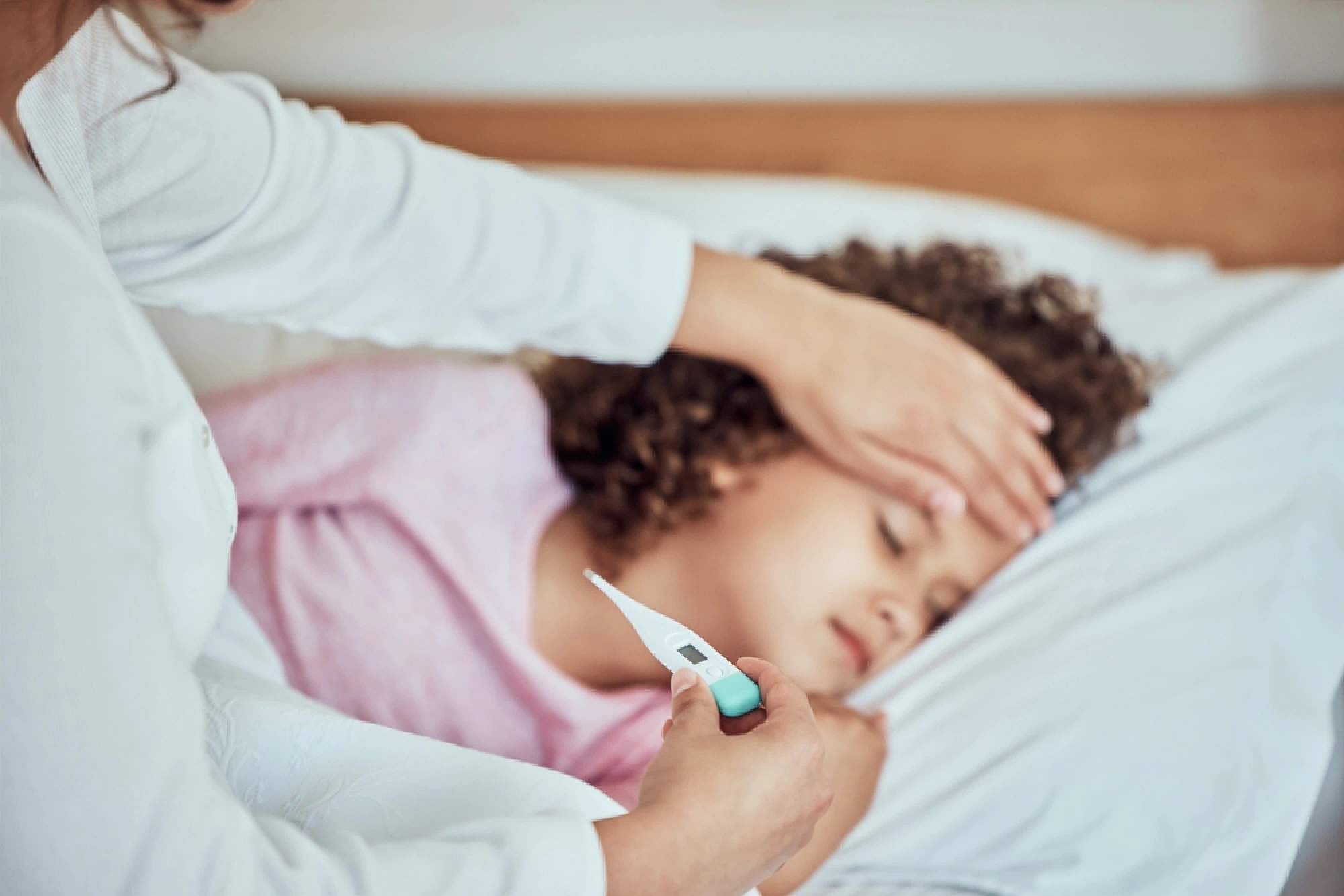
There’s a moment with every stubborn fever when you stop asking how to bring it down and start asking whether it’s actually dangerous. That instinct, the one telling you this isn’t a normal fever, is worth listening to.
At Complete Care, we understand that a high fever can mean anything from a passing viral bug to a sign of something more serious, and you shouldn’t have to guess which one you’re facing. We provide emergency treatment for high fever with the same speed, equipment, and expertise you’d expect from a hospital ER, without the long wait times that often come with one. From rapid lab testing to IV fluids and fever-reducing medication, our emergency-trained physicians work quickly to pinpoint the cause and bring the fever down safely, for patients of any age.
You don’t need to wait until symptoms get worse before getting answers. With freestanding ER locations throughout Texas and in Colorado Springs, help is probably closer than you think.
If a fever won’t break, keeps climbing, or shows up alongside other worrying symptoms, whether it’s you or a loved one, walk into your nearest Complete Care location and let our team take it from there.
For life-threatening situations, please call 911.
Table of Contents
- What is considered a fever?
- What is the main cause of a high fever?
- How to get rid of a high fever fast at home?
- When to go to the ER for a high fever
- What will the ER do for a high fever?
- Why choose Complete Care
- FAQs
What is considered a fever?
A fever is your body’s natural way of fighting off infection, showing up as a temperature at or above 100.4°F. Most fevers are mild, short-lived, and resolve on their own as your immune system does its job. But how high is too high often depends on age, which is why the answer looks a little different for children than it does for adults.
When is a fever too high for a child?
Fevers in children can climb fast, and that speed is often more unsettling for parents than the number itself. As a general guideline, a fever of 104°F or higher, or any fever in a baby younger than three months, calls for immediate medical attention rather than a wait-and-see approach.
Even lower fevers deserve a closer look if your child seems unusually lethargic, won’t drink fluids, develops a rash, or the fever lingers for more than a couple of days. Trust your gut here. You know your child, and if something feels off beyond just the number on the thermometer, that’s reason enough to get them checked out.
When is a fever too high for an adult?
For adults, a fever of 103°F or higher is generally considered high enough to warrant emergency care for a high fever, especially when it’s paired with confusion, difficulty breathing, a stiff neck, or a rash that wasn’t there before. Fevers that stick around for more than three days, even at a lower level, are also worth getting checked out rather than riding out at home.
Adults tend to downplay how they’re feeling and push through a fever the same way they’d push through a cold. But when your body temperature is running that hot, it’s working hard to fight something off, and it’s worth finding out what that something is.
What is the main cause of a high fever?
A high fever is almost always your immune system’s way of signaling that it’s actively fighting something off, most often an infection somewhere in the body. The exact cause can range from a common virus that clears up on its own to something that needs urgent care, and the fever itself is really just a symptom pointing you toward the real issue.
Here are some of the most common culprits behind a spiking temperature:
- Viral infections
- Respiratory infections
- Kidney infections
- Ear infections
- Heat-related illness
- Viral meningitis (symptoms include a stiff neck, severe headache, sensitivity to light, and confusion alongside a high fever)
Most fevers trace back to a common virus that your body can handle with rest and fluids, but a few causes need medical attention right away, particularly anything involving the lungs, kidneys, or nervous system. If you’re not sure which one you’re dealing with, that uncertainty alone is a good enough reason to get checked out rather than wait it out.
What causes a high fever and throat pain?
A fever/sore throat combination is usually a sign that your body is fighting a throat-based infection, whether that’s strep throat, mono throat, tonsillitis, or a common virus like the flu. Bacterial infections like strep tend to bring on a higher, more sudden fever alongside a throat that hurts to swallow, while viral causes often come with a slower buildup and additional symptoms like a cough or runny nose.
Either way, if the sore throat is severe, makes it hard to swallow fluids, or the fever isn’t budging after a couple of days, it’s worth getting evaluated so you know exactly what you’re treating.
How to get rid of a high fever fast at home?
The fastest way to bring a fever down at home is a combination of:
- Take an appropriate fever reducer: acetaminophen or ibuprofen can help lower your temperature and ease the aches that often come with it.
- Stay ahead of dehydration: fevers burn through fluids fast, so keep water, broth, or an electrolyte drink within reach.
- Dress light and keep the room cool: bundling up or overheating the space actually works against you, even if you feel chilly.
- Use a cool compress: placing one on your forehead or the back of your neck can offer some relief between doses of medication.
- Rest as much as you can: sleep gives your body the energy it needs to fight off whatever’s causing the fever.
These steps won’t cure whatever’s behind the fever, but they can make the wait more comfortable while your body does its job.
How to bring down a fever in a child
When it’s your child running hot, the goal is comfort first and temperature second. Here’s how:
- Dress them in light, breathable clothing: skip the extra layers or heavy blankets, even if they feel chilly, since overheating only makes the fever harder to manage.
- Offer small sips of fluids often: water, diluted juice, or an electrolyte drink can help prevent dehydration, especially if they’re not eating much.
- Give an appropriate fever reducer: many parents ask about the best medicine for high fever in kids, and the honest answer depends on the child’s age and weight, so check the dosing chart or ask your pediatrician if you’re unsure.
- Try a lukewarm sponge bath: this can help reduce body aches and regulate temperature, but skip cold baths or alcohol rubs, since those can do more harm than good.
- Let them rest as much as possible: sleep helps the body focus its energy on fighting off whatever’s causing the fever.
- Watch for signs it’s time for extra help: if your child seems more uncomfortable than the fever alone would explain, or nothing you try is making them feel better, that’s your cue to seek care.
When to go to the ER for a high fever
Not every fever needs an ER visit, but certain signs mean it’s time to stop waiting and get evaluated right away. High fevers that come with other severe symptoms can point to something your body can’t fight off on its own, and getting emergency treatment for infections and sepsis quickly can make a real difference in how fast you recover.
Here’s when to go to the ER for a fever:
- A fever of 104°F or higher in anyone, or any fever in a baby under three months old.
- Confusion, difficulty waking up, or unusual drowsiness alongside the fever.
- A stiff neck, severe headache, or sensitivity to light.
- Trouble breathing or chest pain.
- A rash that spreads quickly or doesn’t fade when pressed.
- A fever that persists for more than three days despite home treatment.
- Signs of dehydration, like a dry mouth, dizziness, or noticeably less urination than usual.
If you’re seeing any of these symptoms alongside a high fever, it’s not worth the risk of waiting to see if things improve on their own. Our team can run the tests needed to find the underlying cause and start treatment right away, so you’re not left guessing what’s happening in the meantime.
What will the ER do for a high fever?
When you come in for high fever treatment in the ER, the goal is to find out what’s causing it and start treatment as quickly as possible. Your visit typically starts with a physical exam and a review of your symptoms, followed by any testing needed to pinpoint the source of the fever. From there, treatment is tailored to what’s actually going on, not just the number on the thermometer.
Here’s what that can look like:
- Diagnostic testing: blood work, urine tests, or imaging to identify the infection or condition behind the fever.
- IV fluids: especially important if dehydration has set in, since severe dehydration treatment often starts with fluids delivered directly into the bloodstream.
- Fever-reducing medication: administered to bring your temperature down and ease discomfort while the underlying cause is treated.
- Targeted treatment: antibiotics for a bacterial infection, or other medications depending on what the testing reveals.
- Monitoring: keeping an eye on your vitals to make sure your body is responding well to treatment.
The exact plan depends on what’s causing the fever, but the priority is always the same: figure out what’s happening and treat it fast, so you’re not left waiting for answers you need right away.
Why choose Complete Care for your emergency high fever treatment
When a fever has you worried, you want care that’s fast, thorough, and equipped to handle whatever’s behind it, whether that’s a minor infection or something more serious. Complete Care is built to deliver exactly that, combining the speed of an urgent care visit with the full capabilities of a hospital ER.
Here’s what sets us apart:
- No long waits: our freestanding locations mean you’re seen quickly, without the hours-long waits often found at hospital ERs.
- Full diagnostic capabilities: on-site labs and imaging let us identify what’s causing the fever without sending you elsewhere for testing.
- Emergency-trained physicians: our team has the experience to treat fevers at any severity, from routine to critical.
- Pediatric emergency care: we’re equipped to treat fevers in patients of all ages, including infants and young children who need a gentler, more specialized approach.
- Open when you need us: with extended hours, you don’t have to wait until morning or fit into a clinic’s schedule to get seen.
Whatever’s behind your fever, our goal is to get you answers and relief as quickly as possible, all in one visit.
FAQs
How long can a fever last before it’s considered an emergency?
A fever that sticks around for more than three days, even if it’s not especially high, is worth getting checked out rather than continuing to wait it out at home. The longer a fever lingers, the more likely it is that something needs treatment beyond rest and fluids, like an infection that isn’t clearing on its own. If a fever has lasted this long, or keeps coming back after it seems to break, it’s time to have it evaluated.
What can I do to bring down a high fever immediately?
The quickest way to lower a fever is to take an appropriate dose of acetaminophen or ibuprofen, drink plenty of fluids, and dress in light clothing in a cool room. A cool compress on your forehead or neck can also offer some fast relief while the medication takes effect. If the fever doesn’t start coming down within an hour or two, or it’s paired with other severe symptoms, it’s time to seek medical care instead of continuing to wait it out.
Is a high fever always a sign of infection?
Not always, though infection is by far the most common cause. Fevers can also result from heat exhaustion, certain medications, or in rarer cases, inflammatory conditions unrelated to infection. Regardless of the cause, a fever that’s very high or won’t go away is worth having evaluated.
Can a high fever cause seizures?
Yes, particularly in young children, who can experience what’s known as a febrile seizure when a fever rises quickly. While frightening to witness, these seizures are usually brief and don’t cause lasting harm on their own. That said, any seizure related to a fever should be evaluated right away to rule out anything more serious.
Should I go to urgent care or the ER for a high fever?
Urgent care can be a reasonable option for a mild fever without other concerning symptoms, but the ER is the safer choice when the fever is very high, won’t come down, or comes with symptoms like confusion, difficulty breathing, or a stiff neck. If you’re ever unsure which one fits your situation, it’s better to choose the ER, since we’re equipped to handle both routine and severe cases in one visit.
Get fast relief from a high fever at your nearest Complete Care
A high fever isn’t something you have to manage alone, wondering whether it’s serious enough to act on. When the number keeps climbing, or something about it just doesn’t feel right, our team is ready to provide emergency treatment for high fever the moment you walk through the door, with the testing and treatment needed to find out exactly what’s going on.
With locations in Austin, Corpus Christi, Dallas/Fort Worth, East Texas, Lubbock, San Antonio, and Colorado Springs, expert care is likely closer than you think. Skip the wait and the guesswork, and let our team get you the answers and relief you need, whenever you need them.
The information provided is for educational and informational purposes to help you better understand health conditions and emergency care, but it is not intended as medical advice, diagnosis, treatment recommendations, or a substitute for professional medical evaluation. If you are experiencing a medical emergency, call 911 or visit your nearest emergency room immediately. The content on this site does not establish a doctor-patient relationship and should not be relied upon as the basis for any medical decision. Complete Care’s 24/7 freestanding emergency rooms are staffed with emergency physicians ready to provide immediate, in-person evaluation and treatment when you need it most.
Locations

Get Complete Care
Open 24/7. No Appointment Needed.