11 Common Childhood Illnesses and Symptoms
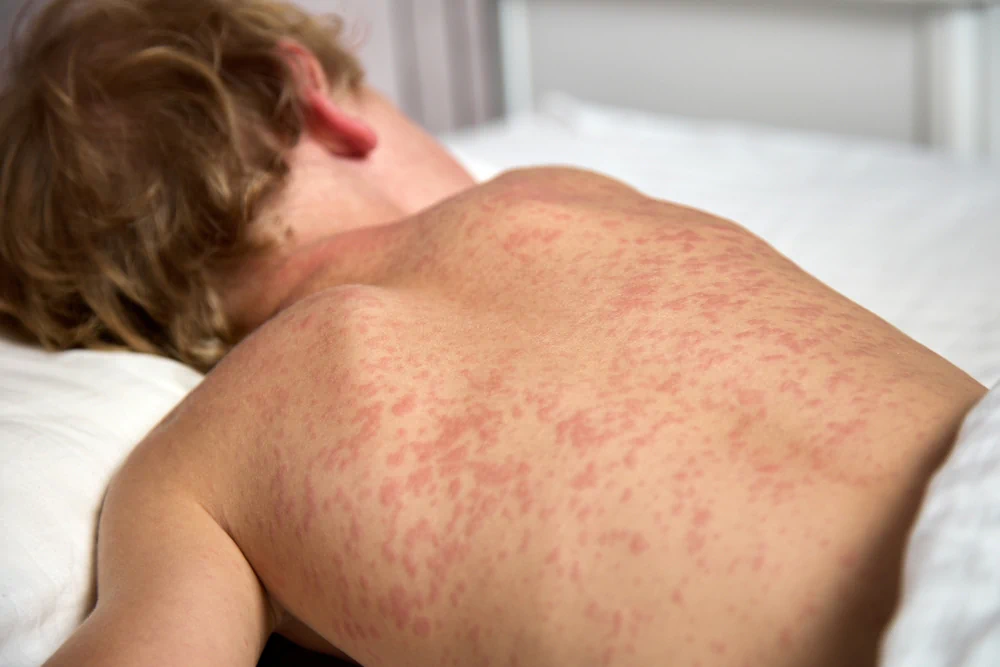
Kids have a talent for getting sick at the most inconvenient times, and no two illnesses ever seem to look exactly alike. The good news is that most of these moments come down to a short list of common childhood illnesses that show up again and again, especially once kids start spending time around other kids at daycare, school, or after-school activities like sports and dance. Learning to recognize each one takes a lot of the guesswork (and the worry) out of parenting a sick child.
Here are 11 of the most common childhood illnesses parents run into:
- Common cold
- Flu
- RSV
- Croup
- Ear infections
- Stomach virus
- Strep throat
- Pink eye
- Hand-foot-and-mouth disease
- Roseola
- Fifth disease
If you’re a parent looking for resources to better spot these illnesses, we’ll go through each one by one. You’ll learn what symptoms to watch for, how each one is usually treated at home, and when it’s time to get your child seen instead of waiting it out. By the end, you’ll be able to tell the difference between “let’s just rest and drink some fluids” and “we need to get this looked at.”
For life-threatening situations, please call 911.
1. Common cold
The common cold is a mild viral infection of the nose and throat. It’s one of the most frequent entries on any list of common childhood illnesses and symptoms, and most kids catch several every year. Symptoms usually show up within a few days of exposure and clear on their own within a week to ten days.
What causes a common cold
Colds are caused by viruses, most often rhinoviruses, that spread through the air or by touching a contaminated surface and then touching the face. Because kids share toys, snacks, and close space with each other, colds are one of the most common causes of sickness in schools and daycare centers each year.
Symptoms of a common cold
- Runny or stuffy nose: clear discharge that may thicken over a few days
- Sneezing: frequent, especially early in the illness
- Mild cough: usually dry at first
- Sore throat: often the first sign a cold is starting
- Low-grade fever: more common in younger children
- Tiredness or fussiness: energy dips while the body fights the virus
Caring for a cold at home
There’s no cure for the common cold, so treatment is all about keeping your child comfortable while their body fights off the virus. Most symptoms peak within the first few days and gradually improve on their own, so the goal is simply to ease discomfort along the way.
- Rest and fluids: extra sleep and water help the body recover
- Saline drops or spray: can loosen congestion, especially in babies
- Cool-mist humidifier: adds moisture to the air and eases coughing
- Over-the-counter pain relievers: manage fever or body aches, check with a pediatrician on dosing
2. Flu
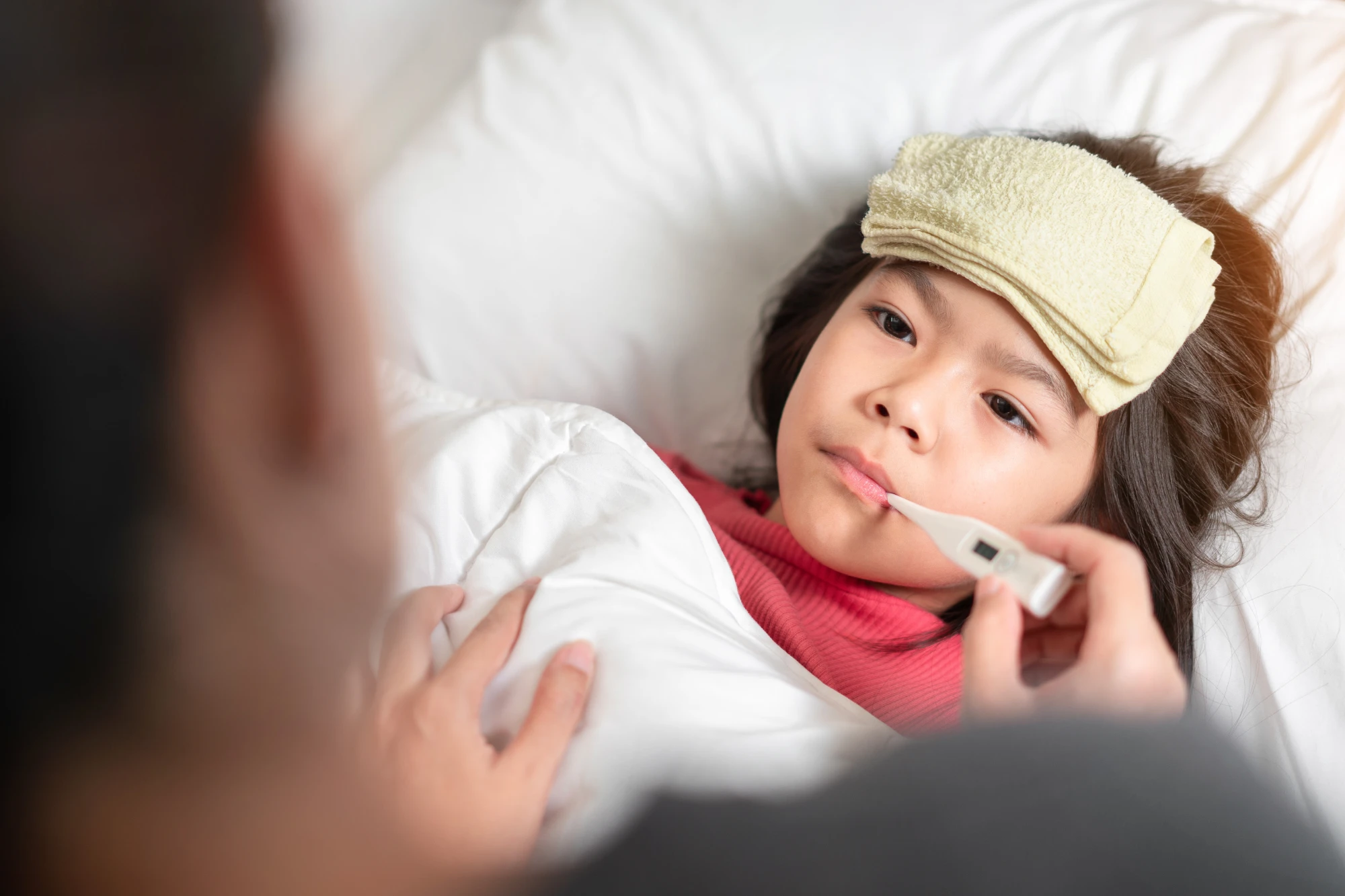
The flu, or influenza, is a viral infection that comes on fast and hits harder than a typical cold. Unlike a cold, flu symptoms often start suddenly with a high fever, body aches, and exhaustion. It is also one of the most disruptive childhood diseases each winter, and kids can spread it to others a full day before symptoms even appear.
How the flu spreads
Influenza spreads through respiratory droplets when someone coughs, sneezes, or talks nearby. It’s contagious in the day or two before symptoms start, which is part of why it moves through classrooms and households so quickly each flu season.
Symptoms of the flu
- Sudden high fever: often over 101°F, appearing quickly
- Body aches and chills: more pronounced than with a cold
- Extreme tiredness: kids may want to sleep more than usual
- Dry cough: can linger after other symptoms fade
- Sore throat and congestion: similar to cold symptoms but sharper
Treating the flu at home
Most healthy kids recover from the flu within a week to ten days with rest and supportive care. Since the flu tends to hit harder and faster than a cold, catching it early and calling the doctor can make a real difference in how it’s treated.
- Rest and fluids: the most important part of recovery
- Fever reducers: acetaminophen or ibuprofen, dosed for your child’s weight
- Antiviral medication: prescribed by a doctor if started early enough to help shorten the illness
- Comfort measures: humidifier, extra pillows, and quiet activities
3. RSV
RSV, or respiratory syncytial virus, is one of the usual childhood diseases nearly every child catches by the time they turn two. Most kids experience nothing worse than cold-like symptoms, but RSV can be more serious in babies and children with underlying health conditions. Parents often search for the symptoms of RSV because it’s easy to mistake for a common cold in the early days.
How RSV spreads
RSV spreads through respiratory droplets and close contact, and it’s contagious for three to eight days. It tends to circulate most between late fall and early spring.
Symptoms of RSV in children
- Runny nose and congestion: often the first symptoms to appear
- Coughing and sneezing: can worsen over several days
- Fever: ranges from mild to high
- Wheezing: a whistling sound when breathing out
- Decreased appetite: especially in babies who are congested
When to seek emergency care for RSV
- Trouble breathing: fast, shallow, or labored breaths
- Caved-in chest or flared nostrils: signs of hard work to breathe
- Bluish tint to lips or skin: needs immediate attention
- Persistent high fever or extreme fussiness: worth a same-day evaluation
4. Croup
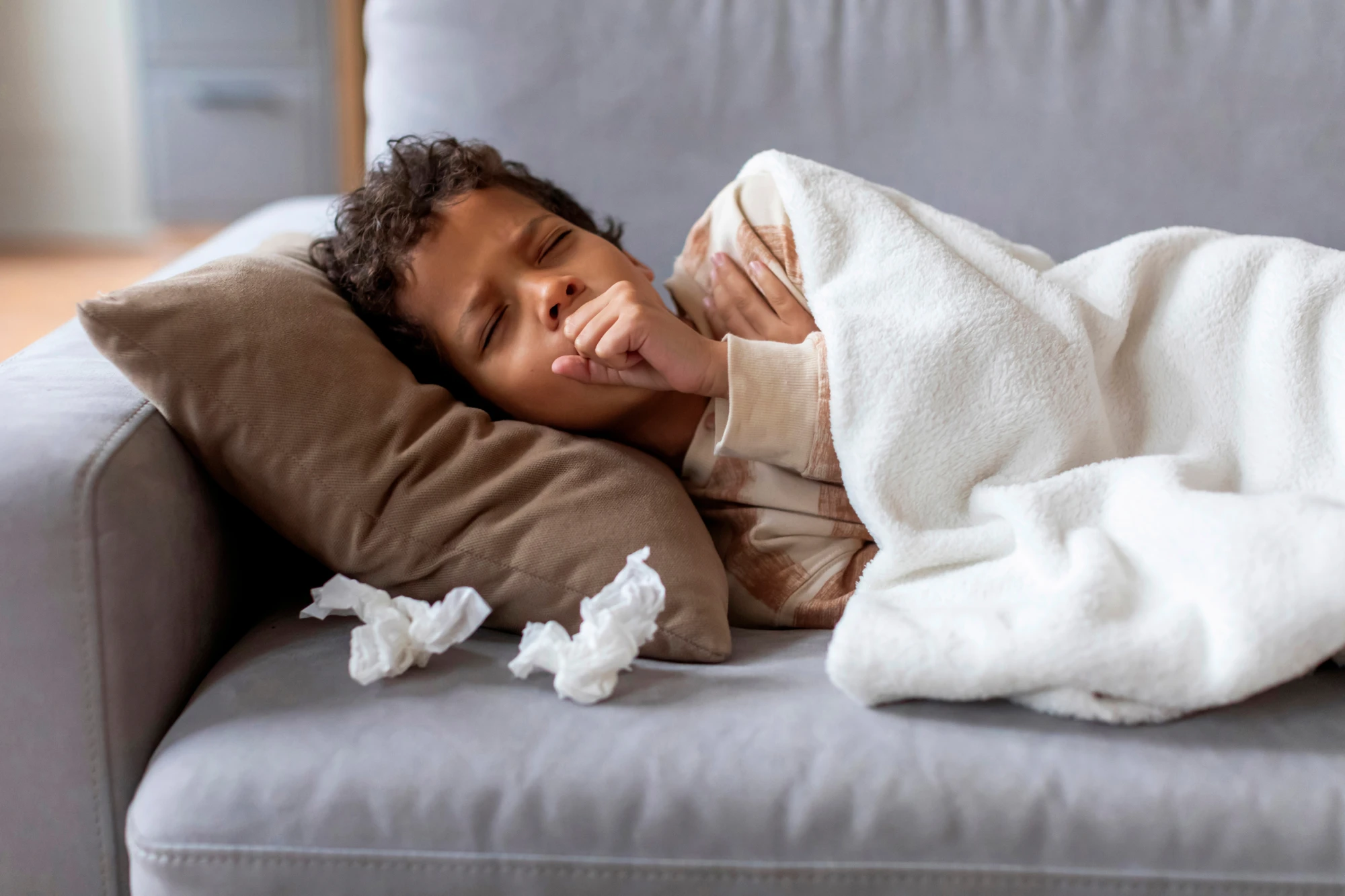
Croup is an infection that causes swelling around a child’s vocal cords and windpipe, leading to a distinctive barking cough. It’s most common in children under five, especially during the fall and winter months. Symptoms often start like a typical cold before the barking cough and hoarse voice set in, usually worsening at night.
What causes croup
Croup is usually caused by a virus, most often parainfluenza, and spreads through respiratory droplets. Some parents search for a croup rash on the face, but croup itself doesn’t typically cause a skin rash. If a rash shows up alongside the cough, it’s usually from a separate virus and worth mentioning to your child’s doctor.
Symptoms of croup
- Barking cough: often described as sounding like a seal
- Hoarse voice: from swelling around the vocal cords
- Stridor: a high-pitched sound when breathing in
- Fever and runny nose: usually mild
- Worse symptoms at night: common on the second or third night
Caring for croup at home
Croup can sound scary in the middle of the night, but most cases are mild and can be managed right at home. Cool or humid air is often the fastest way to calm the airway swelling that causes the barking cough.
- Cool, humid air: a steamy bathroom or cool night air can ease breathing
- Comfort and calm: crying or anxiety can make breathing harder
- Fluids and rest: helps the body fight the infection
- Fever reducers: for comfort, as needed
When to get emergency care for croup
- Loud stridor at rest: a sign of significant airway swelling
- Trouble breathing: especially in infants and babies
- Bluish lips or skin: needs immediate care
- Drooling or trouble swallowing: could signal a different, more serious problem
5. Ear infections
An ear infection happens when fluid builds up behind the eardrum, often after a cold, leading to pain and pressure. They’re especially common in babies and toddlers because of the shape of their ear canals. Most ear infections clear up on their own or with a short course of antibiotics.
What causes ear infections
Ear infections usually follow a cold or upper respiratory illness, when swelling traps fluid behind the eardrum and lets bacteria or viruses grow. A fever in children is one of the more common signs an ear infection has set in, especially when it shows up alongside ear tugging or trouble sleeping.
Symptoms of an ear infection
- Ear pain or tugging: babies may pull or touch the affected ear
- Fussiness: especially when lying down
- Trouble sleeping: pressure often worsens at night
- Fluid draining from the ear: a sign the eardrum may have ruptured
- Reduced appetite: from pain while chewing or sucking
Treating an ear infection
Many ear infections improve on their own within a few days, so doctors often recommend a short waiting period before turning to antibiotics. In the meantime, the focus is on keeping your child comfortable.
- Pain relievers: acetaminophen or ibuprofen for comfort
- Warm compress: held gently against the outer ear
- Watchful waiting: many mild infections clear up without antibiotics within a few days
- Antibiotics: prescribed for infections that don’t improve on their own or are more severe
6. Stomach virus
A stomach virus, also called viral gastroenteritis, causes vomiting, diarrhea, and stomach cramps. It spreads easily among kids through contaminated hands, surfaces, and food. Most cases resolve within a few days, but the biggest concern with any stomach virus is dehydration.
How a stomach virus spreads
These viruses spread through tiny amounts of contaminated stool or vomit, often from unwashed hands. Daycares and classrooms make it easy for a stomach bug to move from one child to the next.
Symptoms of a stomach virus
- Vomiting: often sudden and can last a day or two
- Watery diarrhea: may continue for several days after vomiting stops
- Stomach cramps: come and go
- Low-grade fever: common in the first day or two
- Low energy: from fluid loss and reduced appetite
Care and dehydration warning signs
Because fluid loss is the main risk, it helps to know the signs of dehydration in kids before things get serious. Watch for a dry mouth, no tears when crying, or fewer wet diapers than usual.
- Small, frequent sips of water, breast milk, or an electrolyte solution
- Bland foods: introduced slowly once vomiting stops
- Rest: lets the body recover
- Handwashing: helps prevent spreading the virus to others in the house
When to seek emergency care
If your child shows signs of severe dehydration, such as sunken eyes, extreme drowsiness, or no wet diapers for several hours, it’s time to head to the ER instead of waiting it out at home.
7. Strep throat
Strep throat is a bacterial infection, caused by Group A Streptococcal bacteria, that leads to sudden, severe throat pain, usually without the cough or congestion of a cold. It’s most common in school-age children and needs a doctor’s test to confirm before starting antibiotics. Left untreated, strep can occasionally lead to more serious complications, so it’s worth getting checked.
Symptoms of strep throat
A high-grade fever that comes on quickly, without a cough, is one of the clearest signs of strep throat.
- Sudden sore throat: pain that starts quickly, without a cold beforehand
- Fever: often higher than with a typical cold
- Swollen tonsils: sometimes with white patches
- Swollen, tender lymph nodes: in the neck
- Headache and stomachache: common, especially in younger kids
- No cough or runny nose: a key difference from viral illnesses
Treating strep throat
Because strep throat is caused by bacteria and not a virus, antibiotics are usually part of the treatment plan. Getting a proper diagnosis matters, since starting antibiotics early helps your child feel better faster and lowers the risk of complications.
- Doctor’s visit: a rapid strep test or throat culture confirms the diagnosis
- Antibiotics: clear the infection and reduce the risk of complications
- Rest and fluids: soothing warm liquids can help with pain
- Pain relievers: for fever and throat discomfort
8. Pink eye
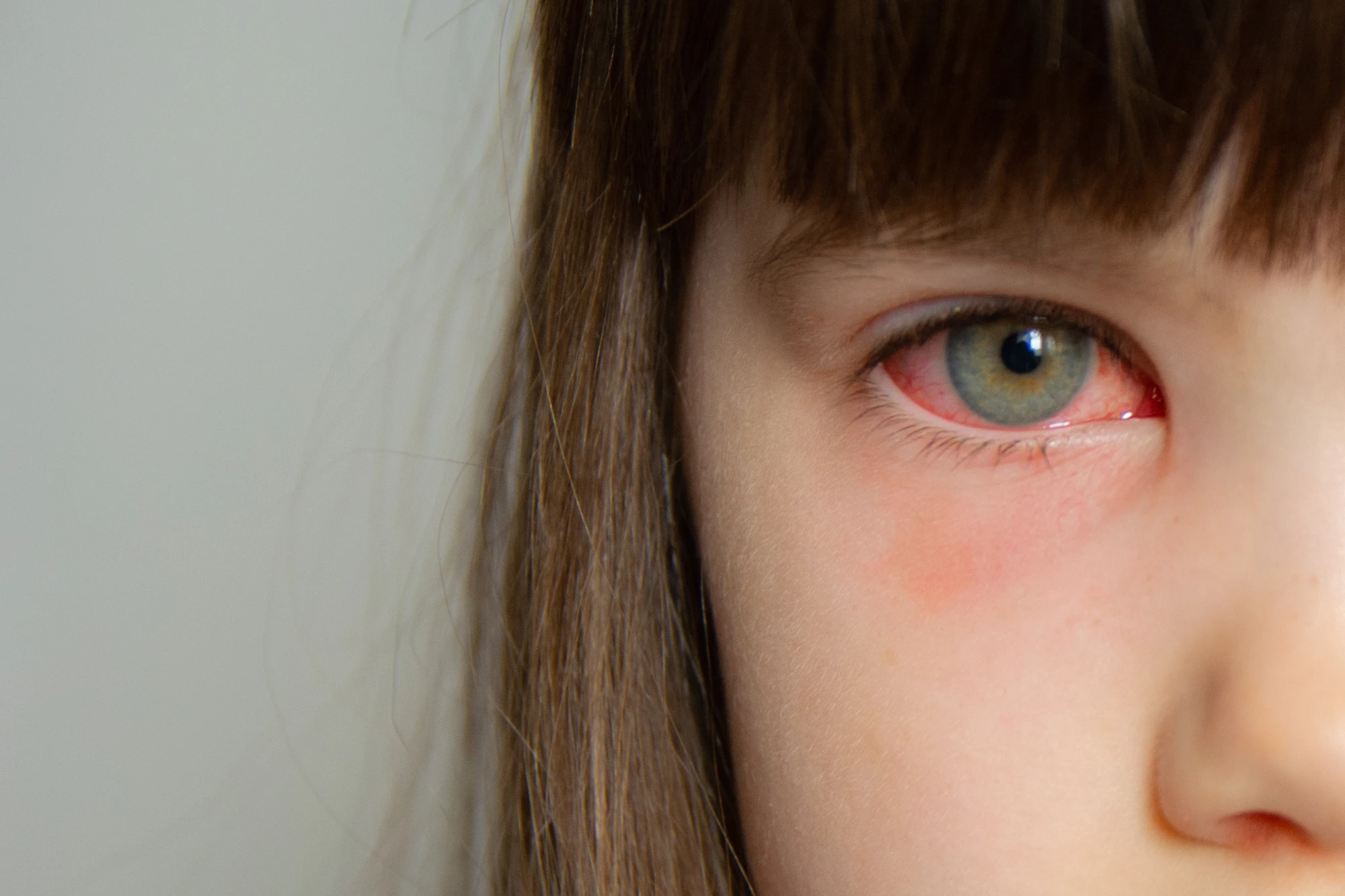
Pink eye, or conjunctivitis, is an inflammation of the thin tissue covering the white of the eye and inner eyelid. It can be caused by a virus, bacteria, or allergies, and it often causes redness, itchiness, and discharge. Pink eye spreads easily among young kids, especially in daycare and school settings.
Symptoms of pink eye
- Redness: in the white part of one or both eyes
- Itching or irritation: often the first symptom noticed
- Discharge: clear and watery with viral pink eye, thicker and yellow or green with bacterial pink eye
- Crusting: especially noticeable after sleep
- Watery eyes: from irritation
Caring for pink eye
Treatment for pink eye depends on the cause, but most cases improve within a week regardless. Keeping hands and surfaces clean goes a long way toward stopping it from spreading to siblings or classmates.
- Warm compress: gently wipes away crusting and soothes irritation
- Frequent handwashing: helps prevent spreading it to others
- Avoiding contact: keep separate towels and pillowcases while contagious
- Antibiotic eye drops: prescribed for bacterial pink eye, though viral pink eye usually just needs time
9. Hand-foot-and-mouth disease
Hand, foot, and mouth disease is a viral infection that causes small mouth sores along with a rash on the hands and feet. It mostly affects children under five and spreads easily in group childcare settings. Most cases are mild and clear up within seven to ten days.
Symptoms of hand, foot, and mouth disease
- Mouth sores: small, painful blisters on the tongue, gums, or inside the cheeks
- Rash: flat or slightly raised spots on the palms, soles, and sometimes the buttocks
- Fever: usually mild to moderate
- Reduced appetite: from mouth pain
- Fussiness: especially in younger children
Caring for hand, foot, and mouth disease
There’s no specific treatment for hand, foot, and mouth disease, so care focuses on managing pain and keeping your child hydrated until the virus runs its course. Mouth sores can make eating and drinking uncomfortable, so cold, soft foods tend to go over best.
- Cold foods and drinks: popsicles or cold milk can soothe mouth pain
- Avoiding acidic or spicy foods: these can irritate mouth sores
- Pain relievers: acetaminophen or ibuprofen for fever and discomfort
- Fluids: encourage sipping throughout the day to prevent dehydration
10. Roseola
Roseola is a viral infection, sometimes called sixth disease, that mostly affects babies and toddlers between six months and three years old. It typically starts with several days of high fever, followed by a rash once the fever suddenly breaks. Roseola is usually mild and clears up on its own within about a week.
This virus is caused by human herpesvirus 6 (HHV-6) or 7 (HHV-7), and it spreads through saliva, respiratory droplets, or close personal contact; symptoms typically last for about a week.
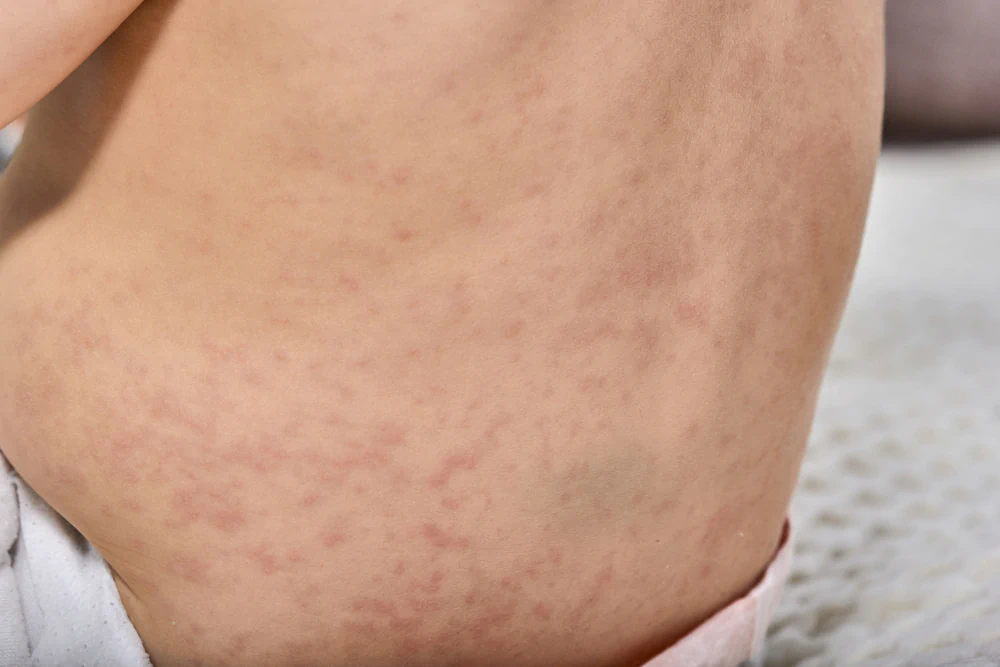
What does the roseola rash look like
The roseola rash appears as small, flat, pink spots that usually start on the chest and belly before spreading to the neck and arms. Some parents look up skin rash roseola after the fever breaks and the spots appear, since it can look alarming at first even though it’s rarely serious. It’s usually not itchy and tends to fade within a day or two.
Symptoms of roseola
- High fever: often over 103°F, lasting three to five days
- Sudden rash: appears once the fever ends
- Mild congestion: sometimes seen alongside the fever
- Swollen lymph nodes: in the neck
- Fussiness and low appetite: common while the fever is high
Roseola is contagious, mainly during the fever stage before the rash appears. Children can return to daycare or school once the fever is gone and they feel well, even if the rash is still present.
Caring for roseola at home
Roseola almost always resolves on its own, and treatment is mostly about keeping your child comfortable through the fever. Once the fever breaks and the rash appears, most kids are already feeling better.
- Fever reducers: acetaminophen or ibuprofen for comfort
- Rest and fluids: supports recovery
- Cool clothing: helps keep your child comfortable during the fever
- Monitoring: watch for signs of dehydration as the fever runs its course
11. Fifth disease
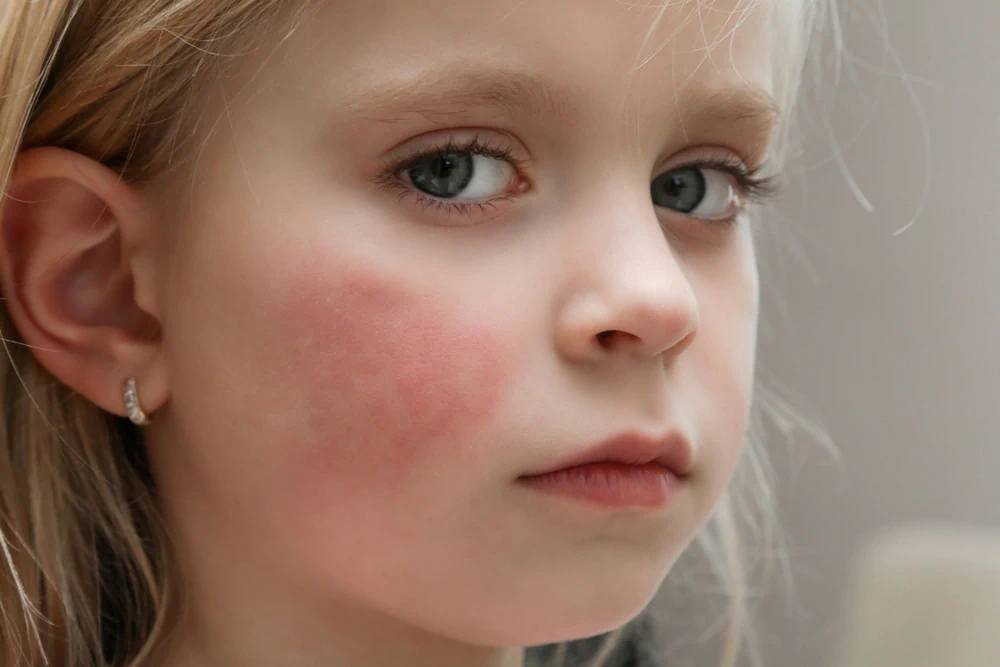
Fifth disease, also called slapped cheek disease, is a viral infection best known for the bright red rash it leaves on a child’s cheeks. It’s typically mild, with a lacy rash that can also appear on the arms, legs, and trunk. By the time the rash shows up, most kids are no longer contagious and can return to school.
Symptoms of fifth disease
If you’re not sure when to worry about a rash, the slapped-cheek look of fifth disease is usually easy to recognize once you’ve seen it.
- Bright red cheeks: the hallmark symptom, giving the illness its nickname
- Lacy rash: on the arms, legs, and trunk, which can come and go for weeks
- Mild fever: often low-grade
- Fatigue: more noticeable in the days before the rash appears
- Cold-like symptoms: runny nose or mild congestion early on
Caring for fifth disease
Fifth disease usually clears up without any specific treatment, and by the time the rash appears, your child is typically no longer contagious. Care is mostly about comfort while the rash and any mild symptoms fade on their own.
- Rest and fluids: the main treatment, since it usually clears on its own
- Pain relievers: for fever or mild discomfort
- Extra caution for certain conditions: kids with sickle cell disease or weakened immune systems should check in with a doctor, since fifth disease can affect red blood cell production
Common childhood illnesses FAQs
What is the most common childhood illness?
The common cold is the most common childhood illness, with most kids catching several every year, especially once they start daycare or school. It’s caused by viruses that spread easily through close contact, shared toys, and everyday surfaces.
How can I tell the difference between a cold and the flu in my child?
A cold usually comes on gradually with a runny nose, sneezing, and a mild cough, while the flu tends to hit suddenly with a high fever, body aches, and exhaustion. If your child goes from playing normally to feeling terrible within just a few hours, it’s more likely the flu than a cold.
Can my child go to school or daycare with a fever?
Most schools and daycares ask parents to keep a child home until they’ve been fever-free for at least 24 hours without the help of fever-reducing medication. This gives the illness time to become less contagious and gives your child a real chance to rest and recover before jumping back into a busy classroom.
How long are common childhood illnesses contagious?
Contagious periods vary quite a bit by illness, but many, like colds, flu, and stomach viruses, are contagious for several days, sometimes starting even before symptoms show up. Checking the specific illness your child has is the best way to know when it’s truly safe to return to school or daycare.
When should I take my child to the ER instead of waiting it out at home?
Head to the ER if your child has trouble breathing, a high fever that won’t come down with medication, signs of severe dehydration, or seems unusually drowsy or hard to wake up. When in doubt, a freestanding ER like Complete Care can evaluate your child quickly, without the long wait times often seen at a traditional hospital ER.
Do your child’s symptoms have you worried? Complete Care’s freestanding ERs are open 24/7.
If your child is showing any of the symptoms from these common childhood illnesses, our emergency care physicians are ready to help, day or night. Complete Care’s freestanding ERs are fully equipped to treat kids in distress, and our pediatric emergency services mean your family gets answers quickly, without the long wait of a traditional hospital. We also offer everyday care like annual checkups, so your child can stay healthy and on track all year round.
Visit one of our freestanding ER locations across Austin, Corpus Christi, Dallas/Fort Worth, East Texas, Lubbock, San Antonio, and Colorado Springs, or contact us today to learn more.
More Helpful Articles by Complete Care:
- Hand, Foot, and Mouth Disease vs Roseola: How to Tell the Difference
- How to Tell if You Have a Broken Thumb
- Abdomen Pain Chart: What Does the Location of Your Pain Mean?
- When to Go to the ER for Blurry Vision After Hitting Your Head
- Can Bronchitis Turn into Pneumonia?

Reviewed By:
Jeffrey Peebles, M.D.
Complete Care's health articles are based on evidence-based medical information and reviewed by Dr. Jeffrey Peebles, Medical Director of Complete Care Southlake, to ensure accuracy and alignment with current medical standards.

Get Complete Care
Open 24/7. No Appointment Needed.