8 Reasons for a CT Scan
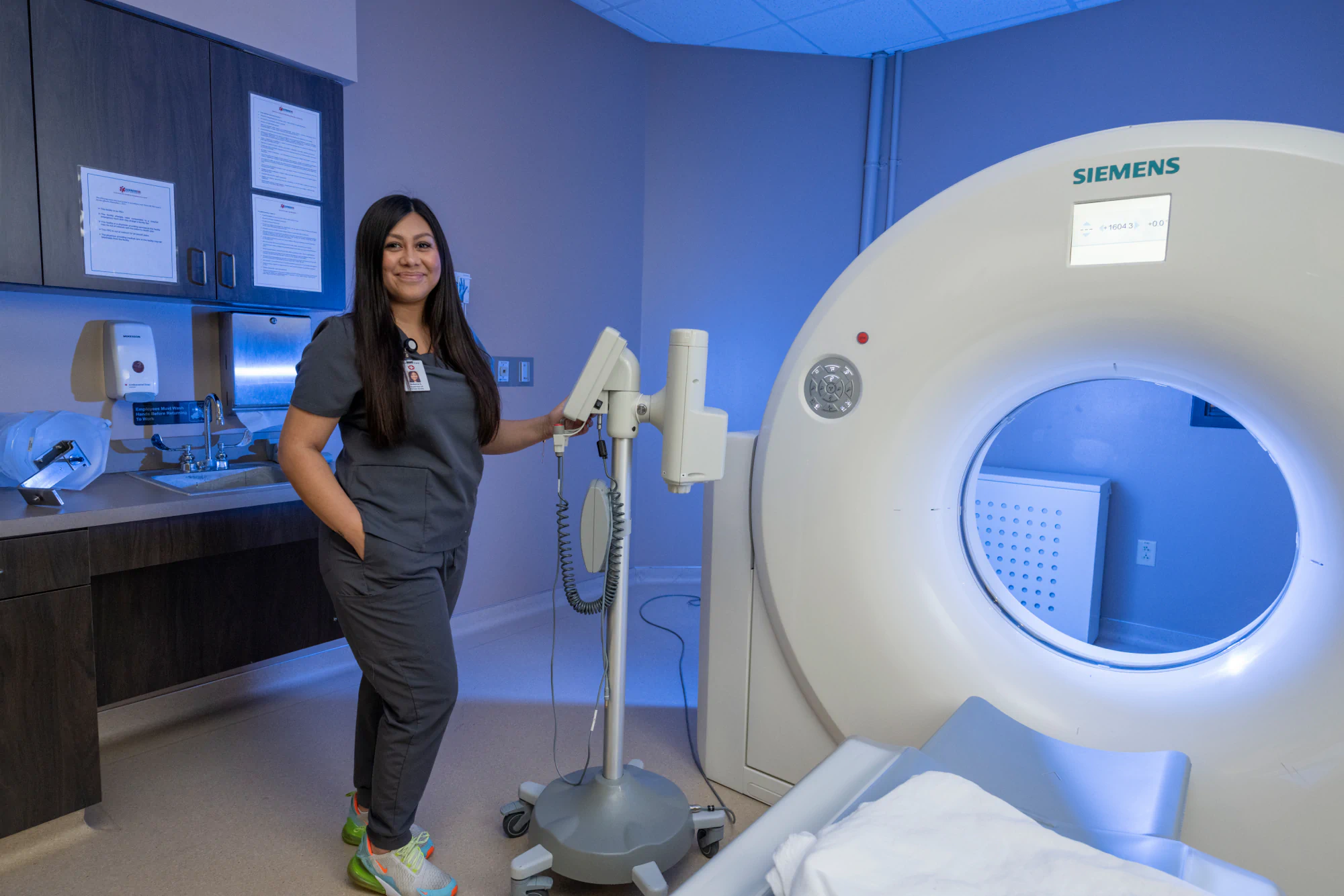
Your body doesn’t always give you a warning before something goes seriously wrong. Because CT scans aren’t part of routine checkups and aren’t available on demand, it can be hard to know when you might even need a CT scan. They’re a powerful diagnostic tool used when emergency-trained physicians need answers quickly to determine the right course of treatment. So, if you’re experiencing an emergency condition and wondering what a CT scan can diagnose, this guide is for you.
Common reasons for an emergency CT scan include:
- Severe or sudden-onset headache that may indicate bleeding in the brain
- Chest pain or shortness of breath that could point to a lung issue or a blood clot
- Severe abdominal pain that may signal appendicitis, kidney stones, or internal bleeding
- Head, neck, or spine injuries following a fall, accident, or trauma
- Stroke symptoms such as sudden confusion, facial drooping, or loss of coordination
- Suspected internal injuries after a car accident or significant impact
- Unexplained loss of consciousness or seizure activity
- Severe infection or sepsis that may have spread to internal organs
If any of these situations sound familiar, don’t wait. Visit one of our freestanding ER locations for immediate care from a team equipped to diagnose and treat emergency conditions — with no long hospital waits and no appointment needed.
For life-threatening situations or active seizures, please call 911.
1. Severe or sudden-onset headache
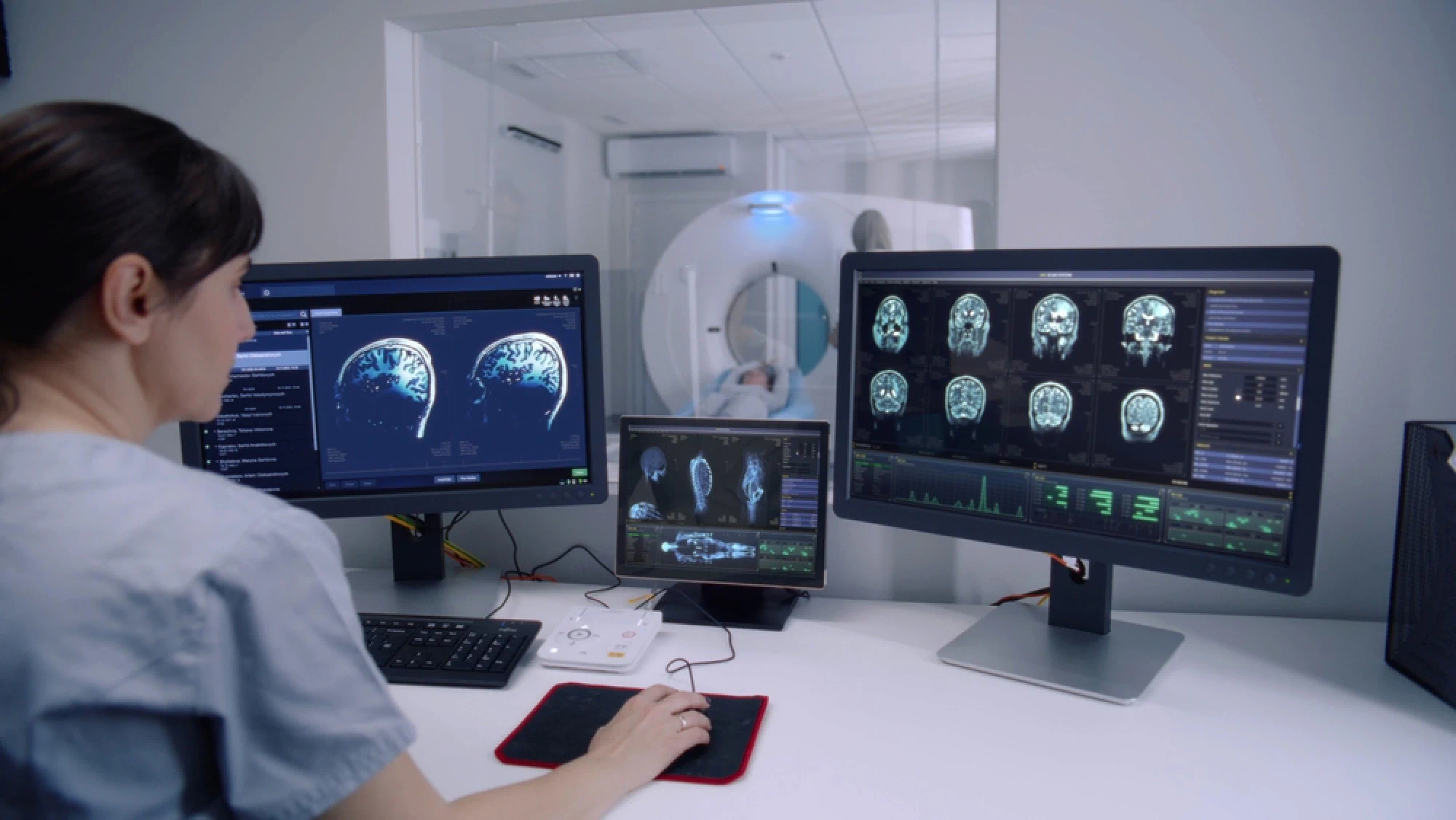
A sudden, severe headache that feels different from any headache you’ve had before is a medical emergency until proven otherwise. This type of headache, sometimes called a “thunderclap headache,” can be a sign of bleeding in or around the brain and requires immediate imaging to rule out life-threatening causes.
A CT scan can detect a brain aneurysm, subarachnoid hemorrhage (bleeding around the brain), or dangerously elevated intracranial pressure. Without a quick diagnosis, these conditions can cause permanent brain damage or death within hours. If your headache came on suddenly and is the worst of your life, do not wait to be seen. Go to a freestanding emergency room like Complete Care and get a CT scan done promptly. You’ll have results and a plan in minutes.
2. Chest pain or shortness of breath
Chest pain or sudden shortness of breath should always be evaluated in an emergency setting, because the underlying cause can range from a muscle strain to a blood clot or heart attack. Symptoms alone are not enough to tell the difference, which is why imaging is a critical part of the diagnostic process.
A CT scan of the chest gives physicians a detailed view of the heart, lungs, aorta, and surrounding structures. It can identify a blood clot in the lungs, fluid around the heart, or an aortic dissection, which is a tear in the main artery carrying blood from the heart. Catching these conditions early is essential, as outcomes worsen significantly with delayed treatment.
3. Severe abdominal pain
Abdominal pain that is intense, sudden, or steadily worsening is a warning sign that something may be seriously wrong with one or more of your internal organs.
Common emergency causes include…
- appendicitis
- kidney stones
- a bowel obstruction
- internal bleeding
- or a ruptured ovarian cyst
…and many of these conditions require immediate treatment.
A CT scan of the abdomen and pelvis gives physicians a comprehensive view of your organs, blood vessels, and surrounding tissue. It can pinpoint the source of pain with a level of detail that a physical exam simply cannot provide. Early imaging in these situations often prevents complications that arise when treatment is delayed.
4. Head, neck, or spine injuries following a fall, accident, or trauma
Trauma to the head, neck, or spine can cause serious internal damage even when there are no visible wounds or obvious symptoms immediately after the event. Fractures, spinal cord compression, and bleeding inside the skull can all be present in someone who initially feels relatively okay.
A CT scan is one of the fastest and most accurate tools available for evaluating traumatic injuries to these areas. It produces detailed cross-sectional images that can reveal fractures, disc damage, brain bleeding, and soft tissue swelling that a standard X-ray would miss. This is especially critical for emergency sports injuries, where an undetected spinal or head injury can lead to permanent complications if not identified and treated right away.
5. Stroke symptoms
A stroke is a medical emergency in which blood flow to part of the brain is interrupted, either by a clot or a ruptured blood vessel. Brain cells begin dying within minutes of losing blood supply, which is why fast diagnosis and treatment are critical to survival and recovery.
Common stroke symptoms include sudden confusion, slurred speech, facial drooping, weakness or numbness on one side of the body, and vision changes. A CT scan is typically the first imaging step taken when a stroke is suspected because it quickly distinguishes between an ischemic stroke (caused by a clot) and a hemorrhagic stroke (caused by bleeding). That distinction determines the entire course of treatment, and getting it wrong can be fatal.
6. Suspected internal injuries after a car accident or significant impact
Internal injuries are among the most dangerous trauma outcomes because they are not visible from the outside, and symptoms can take time to appear. Organ lacerations, internal bleeding, and fractured ribs can all be present in a patient who is conscious and communicating after a high-impact accident.
A CT scan of the chest, abdomen, and pelvis allows physicians to rapidly assess the full extent of trauma-related injuries. It can detect bleeding around the liver or spleen, injuries to the kidneys, and damage to major blood vessels before a patient’s condition deteriorates. In trauma care, this kind of fast, accurate imaging is often what allows physicians to intervene before an injury becomes fatal.
7. Unexplained loss of consciousness or seizure activity
Losing consciousness or experiencing a seizure without a known cause is a neurological event that requires a thorough emergency evaluation. While some causes are benign, others, including brain tumors, intracranial bleeding, and structural abnormalities, require imaging to identify and cannot be ruled out through a physical exam alone.
A CT scan of the brain helps physicians look for physical explanations, such as masses, lesions, bleeding, or swelling, that may be triggering abnormal neurological activity. Identifying a structural cause quickly is important because many of these conditions worsen without treatment. If you or someone you know has lost consciousness or had a first-time seizure, an emergency evaluation is the appropriate next step.
8. Severe infection or sepsis
A severe infection that has spread beyond its original site, or that is causing symptoms throughout the body, is a medical emergency. Sepsis occurs when the body’s response to infection begins damaging its own tissues and organs, and it can progress to organ failure and death if not treated aggressively and promptly.
A CT scan helps physicians locate the source of a severe infection and determine how far it has spread. It can identify abscesses, infected fluid collections, and signs of organ involvement that need immediate intervention. Knowing the source and extent of the infection quickly allows your care team to begin targeted treatment rather than guessing, which significantly improves outcomes in sepsis cases.
Where to get a CT scan near you?
CT scans are typically only available in emergency and hospital settings, not urgent care centers. If you are experiencing a serious or sudden symptom, knowing where to go ahead of time can save critical minutes.
Here are a few ways to find the right care quickly:
- Search for freestanding ERs in your area: Freestanding emergency rooms offer the same level of care and on-site imaging as a hospital ER, with significantly shorter wait times. Search “freestanding ER near me” to find locations close to you.
- Avoid urgent care for emergencies: Urgent care centers are not equipped to perform CT scans or handle true medical emergencies. If your symptoms are severe or sudden, an urgent care clinic is not the right destination.
- Call 911 if you cannot safely travel: If your symptoms are severe enough that driving or being driven is not safe, call 911. Emergency medical teams can begin stabilizing you on the way to the ER.
- Check ER wait times online: Some ERs post live or estimated wait times on their websites, which can help you make a faster decision when every minute counts.
If you are unsure whether your symptoms warrant an ER visit, it is always better to err on the side of caution. CT scans and emergency imaging exist for situations where waiting is not a safe option.
Emergency CT scan — FAQs
What are the symptoms that may require a CT scan?
Symptoms that typically require a CT scan include:
- Severe or sudden headache
- Chest pain
- Difficulty breathing
- Intense abdominal pain
- Stroke symptoms
- Trauma to the head, neck, or spine
These are warning signs that something serious may be happening internally and needs to be addressed quickly. If your symptoms came on suddenly or are getting worse, an emergency evaluation is the appropriate next step.
What can be diagnosed with a CT scan?
A CT scan can diagnose a wide range of emergency conditions, including:
- Brain bleeding
- Blood clot
- Appendicitis
- Kidney stones
- Internal bleeding
- Fractures
- Stroke
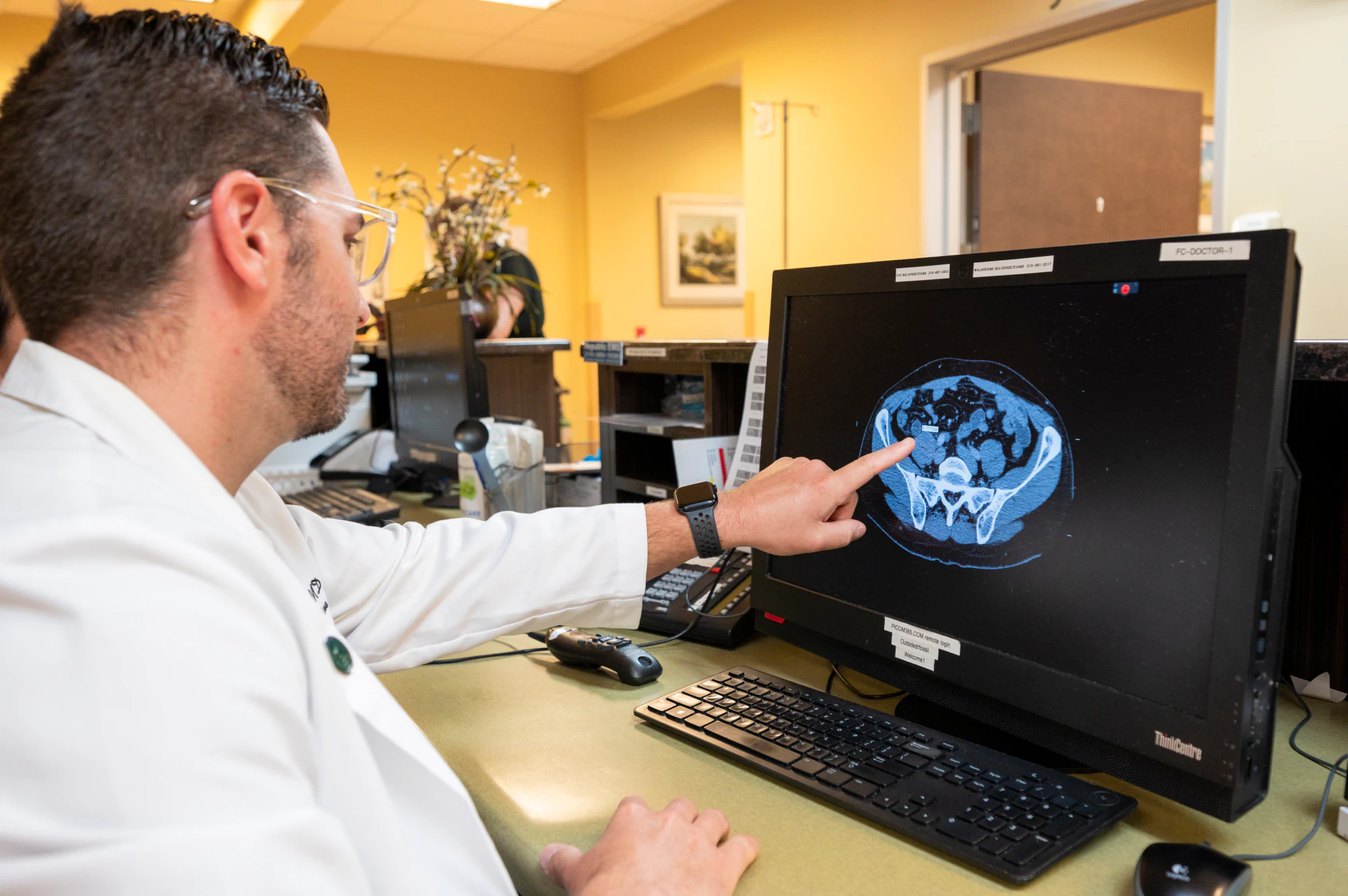
As part of a comprehensive set of diagnostic services, CT imaging gives emergency physicians a fast and detailed look inside the body that guides treatment decisions. It is one of the most versatile and widely used tools in emergency medicine.
What cannot be detected on a CT scan?
CT scans are highly effective for emergencies, but have limitations. They are less effective at imaging soft tissue detail compared to an MRI, and they may not detect very early-stage tumors, ligament tears, or subtle spinal cord injuries. Your physician will determine whether a CT scan or another form of imaging is the most appropriate tool for your specific symptoms.
CT scan vs MRI: what is the difference?
A CT scan uses X-rays to produce fast, detailed images of bones, organs, and blood vessels, making it the preferred tool in emergency settings. An MRI uses magnetic fields to produce more detailed images of soft tissue, making it better suited for non-emergency diagnostic workups.
The key difference comes down to speed and purpose: CT scans are built for urgent situations, while MRIs are better for in-depth evaluation when time is not a factor.
Can I walk into a freestanding ER and get a CT scan?
You can walk into a freestanding ER without an appointment, but a CT scan will only be ordered if a physician determines it is medically necessary based on your symptoms. CT scans are not available on demand for asymptomatic patients. If you are experiencing an emergency condition, a freestanding ER is fully equipped to evaluate you and order imaging immediately if needed.
Get emergency CT scan results fast at your nearest Complete Care
Understanding the reasons for a CT scan is the first step. Knowing where to go when symptoms strike is the second. Complete Care’s freestanding emergency rooms are fully equipped with on-site CT imaging and staffed by emergency-trained physicians who are ready to evaluate and treat you without the long waits of a traditional hospital ER.
With locations in Austin, Corpus Christi, Dallas/Fort Worth, East Texas, Lubbock, San Antonio, and Colorado Springs, there is a Complete Care near you. If you or someone you love is experiencing a sudden or severe symptom, do not wait. Walk in today and get the answers you need fast.
More Helpful Articles by Complete Care:
- Sharp Gastric Pain: When to Go to the ER
- Common Signs and Symptoms of Viral Meningitis
- Complete Guide: What To Do for a UTI
- How to Treat a Deep Cut on Your Finger
- Should I Go To the ER for Back Pain?
The information provided is for educational and informational purposes to help you better understand health conditions and emergency care, but it is not intended as medical advice, diagnosis, treatment recommendations, or a substitute for professional medical evaluation. If you are experiencing a medical emergency, call 911 or visit your nearest emergency room immediately. The content on this site does not establish a doctor-patient relationship and should not be relied upon as the basis for any medical decision. Complete Care’s 24/7 freestanding emergency rooms are staffed with emergency physicians ready to provide immediate, in-person evaluation and treatment when you need it most.

Reviewed By:
Jeffrey Peebles, M.D.
Complete Care's health articles are based on evidence-based medical information and reviewed by Dr. Jeffrey Peebles, Medical Director of Complete Care Southlake, to ensure accuracy and alignment with current medical standards.

Get Complete Care
Open 24/7. No Appointment Needed.